
The Clearing Corporation of India (CCIL) will be able to reapply for recognition by the European Union's (EU) financial markets regulator following a pact signed on Tuesday between the Reserve Bank of India (RBI) and the European Securities and Markets Authority (Esma).

'Large firms and their interests can dominate the narrative, even as smaller stakeholders and retail investors struggle to be heard.' 'Regulators therefore require deep subject-matter expertise to assess representations, recognise underlying incentives, incorporate the perspectives of less-visible stakeholders, and guard against bias or capture,' notes Ananth Narayan.
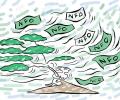
Uncertainty stemming from the US-Iran conflict has significantly impacted India's mutual fund industry, leading to a sharp decline in new fund offers (NFOs) in March, despite numerous regulatory approvals. This geopolitical tension, coupled with existing market strain and distributor hesitation, has dampened investor sentiment and affected overall inflows.

The strained bilateral relations between India and Bangladesh filtered onto the cricket field as captains of the two teams abstained from making customary handshake ahead of their U-19 World Cup Group A match in Bulawayo on Saturday, though the players from both sides were seen exchanging handshakes and pleasantries on the field at the end of the match.
Sebi Chairman Tuhin Kanta Pandey announced intensified surveillance and technology-driven enforcement to combat pre-investment scams targeting retail investors, who are increasingly being lured by fake trading apps and promises of high returns.

Following a ban on real-money gaming, Dream Sports, the parent company of Dream11, is strategically expanding its portfolio across 11 companies, including a new venture into wealth management and stockbroking, with a focus on serving a mass user base through AI-first solutions, cofounder Harsh Jain confirmed.

We will explore some of the reasons why a stock-only portfolio may no longer be sufficient and some of the modern alternatives and strategies that can help investors build resilient and profitable portfolios.

Suryakumar Yadav's strategic emphasis on skill over sledging propelled Team India to a decisive victory against Pakistan in the T20 World Cup, showcasing the power of focus and execution.

'We are profoundly energy-dependent on the Gulf. That dependency must now be redirected towards the United States, because we require American permission to procure oil.' 'We additionally require Iranian permission to acquire oil from that source. So India now has to seek two separate permissions merely to secure its energy supply.' 'Should we be compelled to source from America, or from Venezuela -- which is, in effect, American-controlled supply -- that will inevitably carry a price premium, an elevated shipping cost, and a considerably extended delivery timeline, given the distances involved.'
India's market regulator has found that Bank of America shared confidential details ahead of a 2024 block trade and later misled regulators during the investigation.

Sebi is working with other regulators to expand the CAS framework.

As the government moves to revamp India's securities legislation, unifying three different laws into the Securities Markets Code (SMC), regulatory experts and market insiders have raised concerns on potential funding challenges for the stock market regulator.

After completion of its mandatory tender offer in Fortis Healthcare and Fortis Malar Hospitals, Malaysian health care giant IHH Healthcare is aiming to add 2,000 beds in a bid to double down on value creation in India. IHH, which is Asia's largest multinational private healthcare provider, currently has over 5,000 beds across a combined network of 35 hospitals and 11 states.

Securities and Exchange Board of India (Sebi) Chairman Tuhin Kanta Pandey on Thursday called for sharper disclosures in IPO (initial public offering) offer documents, particularly around risk factors, valuation rationale, objects of the issue, and utilisation of proceeds.

The government has infused over Rs 3,100 crore into women-led startups over the past six years, through its three schemes including the Fund of Funds for Startups (FFS), Startup India Seed Fund Scheme (SISFS), and Credit Guarantee Scheme for Startups (CGSS) to boost female entrepreneurship across the country, according to an update shared by the Ministry of Commerce and Industry.

The Supreme Court on Tuesday dismissed an appeal of Reliance Industries Limited and two of its officials against a decision of the Securities Appellate Tribunal, which had upheld a penalty imposed by markets regulator Sebi for not making prompt clarification to stock exchange about the Jio-Facebook deal.

The tribunal granted partial relief to the appellants by modifying Sebi's directions on trading restrictions and account freezes, making them conditional on the deposit of the said amount.

Eighteen new-age technology firms went public during the year, a near triple increase from the five firms that debuted in 2023 and 38 per cent more than 2024's tally of 13.

The Mumbai Bench of the National Company Law Tribunal (NCLT) on Tuesday gave its approval to Vedanta Limited's demerger proposal, clearing the way for the group to reorganise its operations into five distinct, sector-specific entities.

The average daily turnover (ADTV) in the derivatives market rose to a 12-month high in October, touching 506 trillion - up nearly 46 per cent since June - as volatility picked up and concerns over further regulatory tightening eased. Derivatives activity had slumped earlier this year after the Securities and Exchange Board of India (Sebi) capped weekly expiries to two days and discontinued weekly contracts on non-benchmark indices.

In the mid-1990s, when the shares of listed companies first began to be held in electronic form, they accounted for less than 1 per cent of the stocks bought and sold on the stock exchanges. This climbed to 99.5 per cent by 2001.

While not all complaints are frivolous, experts say petitions timed close to an IPO or listing often raise concerns about mala fide intent.

In November, six primary market issuances accounted for more than 13,000 crore of net equity investments by MFs.

What is the reason behind this drying up of talent for the top post in private banks?

The number of rights issues more than doubled and hit a 28-year high in 2025, even as qualified institutional placements (QIPs) shrank amid a broader market correction and the Securities and Exchange Board of India's (Sebi's) revised framework for rights issues.

The Securities and Exchange Board of India (Sebi) on Wednesday overhauled the cost framework for the 80 trillion domestic mutual fund (MF) industry, introducing a simplified structure aimed at improving transparency for investors while balancing the impact on asset managers.

The winter session of Parliament is set to begin with the government prioritizing its reforms agenda, including a bill to open the civil nuclear sector to private players. The opposition is expected to raise concerns about electoral roll revisions and air pollution.

Stock markets rebounded on Friday with the benchmark Sensex closing higher by 316 points after heavy buying in banking and metal shares amid optimism over trade deal progresses and India's participation in Pax Silica.

But selectively, with regulatory scrutiny and special approval, points out Tamal Bandyopadhyay.

Even as the benchmark and broader indices were down sharply on Monday due to escalating tensions in West Asia, the Nifty Defence index ended the session in the green.

The insurance industry is trying to get to grips with provisions in the proposed Insurance Amendment Bill, which gives additional powers to the Insurance Regulatory and Development Authority of India (Irdai), while there is ambiguity in the very definition of the insurance business, according to industry experts.

Capital markets regulator Sebi on Tuesday granted additional time to stock brokers for the full rollout of the retail algo trading framework by April next year, allowing a phased implementation to ensure a smooth transition to the new system.
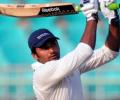
Jammu and Kashmir skipper Paras Dogra downplayed an on-field incident where he headbutted Karnataka player KV Aneesh during the Ranji Trophy final, stating it was a heat-of-the-moment occurrence that has been resolved.

Overlap refers to the same stocks appearing across fund portfolios.
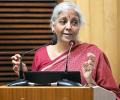
Finance Minister Nirmala Sitharaman on Thursday said the government cannot restrain retailers from trading in Futures and Options (F&O) but will definitely create awareness regarding the risks involved in putting money in such instruments.

They accounted for 39.1 per cent of the premium paid to trade equity options in September 2025.
The rise of algorithmic and high-frequency trading brings efficiency but also demands robust risk controls, real-time monitoring and compliance safeguards, Securities and Exchange Board of India Chairman Tuhin Kanta Pandey told the Morningstar Investment Conference India 2025.

The settlement cycle for cash, derivatives, and securities lending and borrowing mechanism (SLBM) segments has been revised after September 5 and September 8 were declared as settlement holidays by clearing corporations, markets regulator Sebi said on Monday.
Markets regulator Sebi on Wednesday overhauled the block deal framework for stock exchanges, by setting a minimum trade size limit of Rs 25 crore and introducing two trading windows with tighter price limits and enhanced disclosure norms. The latest move by the Securities and Exchange Board of India (Sebi) aims to ensure greater transparency and efficiency in the execution of large trades.

Wesley So showed remarkable consistency to clinch the title in the Open category with a round to spare
